
Looking at video production and editing from cradle to grave this year has given me a new appreciation for just how much work goes into producing content. It has also made me appreciate the lengths a company must go for streaming this content; on the surface one that seems like a simple task but is infinitely more complex.
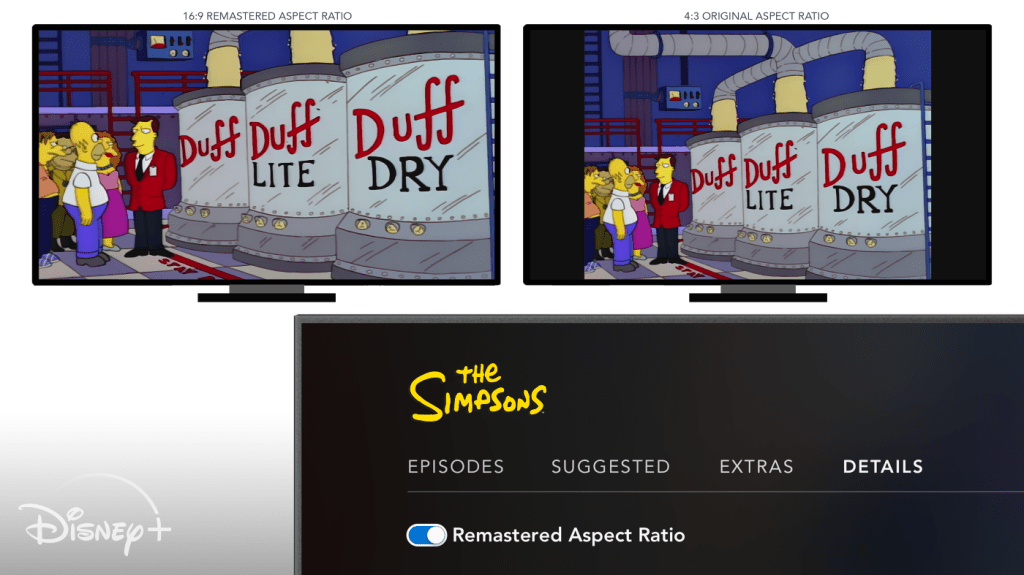
A good example of this is when Disney+ integrated The Simpsons into their service. Having bought 20th Century Fox Studios, they were now the keepers of The Simpsons. The previous Simpsons streaming service had both the original 4:3 and remastered 16:9 aspect ratios, but when Disney launched Disney+ they only included the 16:9 ratios.
A post on the Disney Technology Blog from Joe Rice highlights how this impacted viewers.
The cropping yields the side-effect of excluding visual context from some scenes, limiting the impact of some funny sight gags:

The average consumer would be baffled by this oversight in leaving this out. After all, the previous service had them, so why doesn’t Disney+. Just copy and paste the files from FX to Disney+ and publish.
The reality is that streaming services don’t just serve up video files like you have stored from your camera or iPhone as a single file.
Before the content can be ingested and processed by Disney Streaming Services (DSS), it has to be packaged for delivery by our partners in Studio Operations. This packaging process makes use of another industry standard, the MovieLabs Digital Distribution Framework (MDDF), which defines the methods for representing content assets and associated metadata so they can be understood by our media pipeline. You can think of MDDF as a set of instructions that dictate how the content ultimately drives the playback experience on Disney+.
Every time you stream a video from a streaming service, you’re not just streaming a single video file. Instead, you’re streaming “packages” they are put together and pushed to your application. For example, the package might contain multiple language files. Selecting a different language would result in altering which components of the package get delivered to you.
The DSS team was excited by the opportunity to identify and challenge assumptions, and after reviewing the pros and cons of approaches involving multiple EIDRs and creating complex relationships between them, it was clear that the cleanest path forward was to make a fundamental change to the content model to break the assumption that only a single version of video would be present in any given package.
The engineers at Disney turned the packaging concept on its head by saying “let’s have multiple video options within a single package. This let’s the user select which video stream they get, and since the audio is identical regardless, their storage and management of the audio stream stays the same.
This is all very complex stuff in terms of distribution and engineering and stuff I will probably never have to deal with even as I further dabble in video content creation, but it is cool to understand how things flow end-to-end from the point of creation to consumption and all the pieces in between.
 skynsemi
Leave a comment